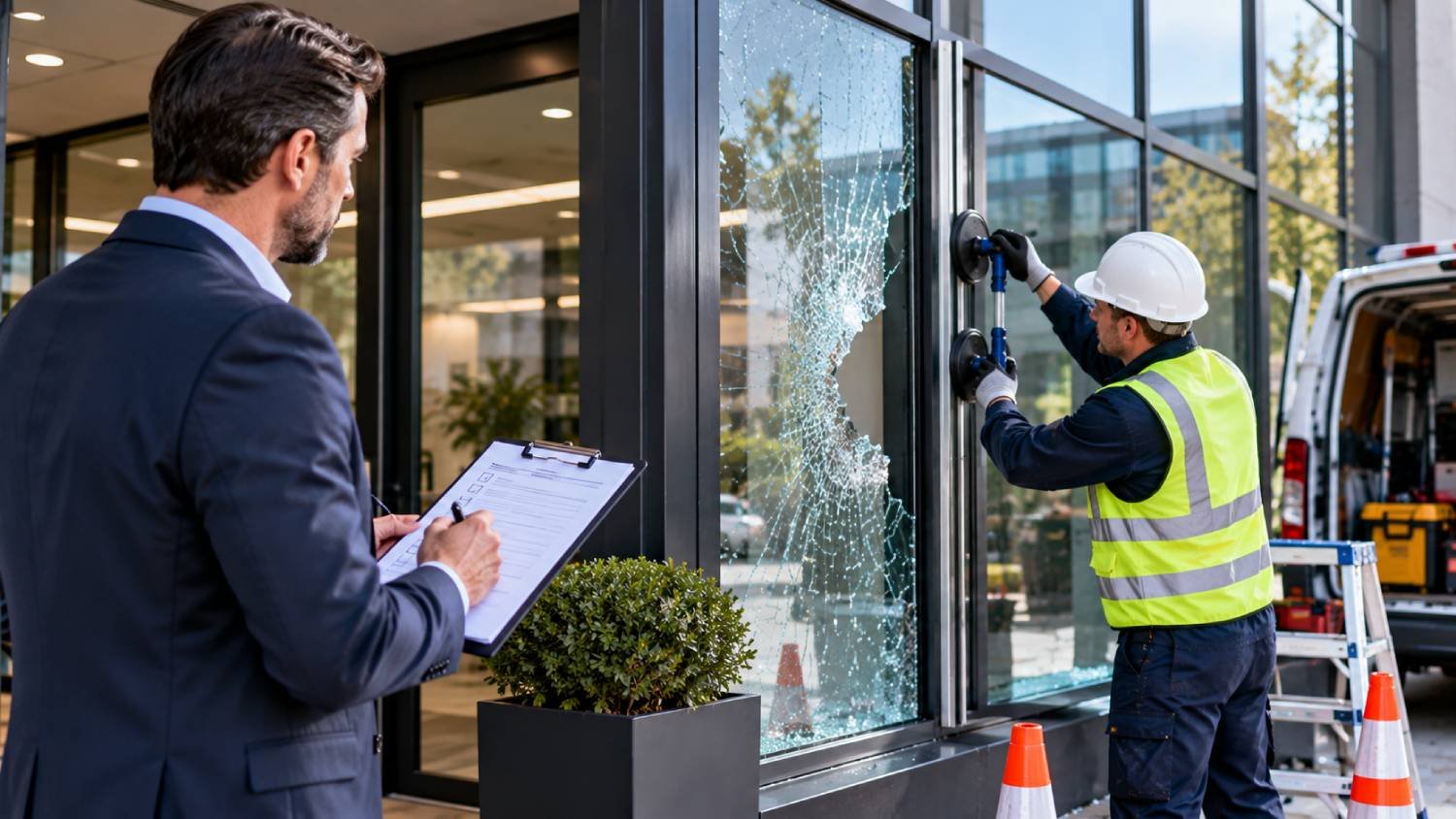
Broken or damaged glazing on a commercial building creates immediate safety and security risks. Whether caused by vandalism, impact, weather or simple failure, the situation needs a clear, ordered response.
Having a practical checklist ready helps property managers act quickly and consistently. Reliable emergency glazing services form a central part of that response, covering both temporary securing and permanent repair.
Immediate Safety Actions
The first priority is always people. Isolate the damaged area with barriers or tape so staff, tenants and the public cannot approach broken glass. Restrict access through any affected doors or entrances.
Do not attempt to remove large pieces of glass yourself. Loose fragments can fall without warning, and tempered glass can release suddenly once the edge is disturbed. Leave clearance of debris and removal of remaining glass to trained glaziers.
If the opening compromises security or weather protection, note the exposure level. Ground-floor shopfronts and entrance doors usually need securing the same day or night.
Document the Damage
Before any temporary boarding is fitted, take clear photographs from several angles. Include wide shots of the elevation, close-ups of the break, the frame condition and any surrounding damage.
Record the time of discovery, who reported it and any visible evidence of forced entry or impact. These details support insurance claims and, where relevant, police reports. Keep broken glass on site if insurers request inspection, unless it presents an immediate hazard.
Contact the building insurer promptly and obtain a claim reference if the policy covers emergency works. Inform the landlord or freeholder according to the lease requirements.
Secure the Property Temporarily
Most commercial glass cannot be replaced on the same visit, especially double-glazed, laminated or specialist units that must be manufactured to size. Temporary boarding is the standard method of making the opening secure and weather-tight.
Boarding protects against further intrusion, weather damage and risk to passers-by. It also allows time for accurate measurement and ordering of the correct replacement glass. Temporary measures should remain in place only until the permanent unit is ready for installation.
Arrange Professional Response
Once the immediate area is safe and documented, contact a glazier experienced in commercial work. Provide the address, a description of the damage, the type of glass if known, and any access restrictions for out-of-hours attendance.
A competent team will assess the hazard, remove dangerous glass, board or film the opening, and take precise measurements for the replacement. They should also check the condition of the surrounding frame, seals and hardware, as impact often affects more than the glass alone.
Key Points to Confirm with the Provider
When arranging the response, confirm these practical details:
- Out-of-hours availability and expected attendance time
- Whether boarding materials and fixings are carried as standard
- Experience with the type of glazing involved (shopfront, double-glazed units, doors, high-level panels)
- Process for measuring, ordering and fitting the permanent glass
- Insurance cover and any required site reporting
- Clear communication of costs and timescales for both temporary and permanent works
Having these points agreed in advance, ideally through a pre-approved supplier list, reduces delay when an incident occurs.
Planning the Permanent Repair
Once the building is secure, the permanent replacement follows. Custom units often need manufacturing time, particularly if they are toughened, laminated, coated or non-standard sizes. The glazier should supply a clear specification and expected lead time.
During this period, monitor the temporary boarding for security and weather performance. Communicate expected completion dates to tenants or building users so they understand the timeline.
After installation, check that the new glass sits correctly in the frame, seals are intact and any hardware functions properly. Keep records of the work for maintenance files and insurance purposes.
Preparing Ahead of an Incident
The most effective response starts before anything breaks. Maintain a short list of trusted emergency glazing contacts with confirmed 24-hour capability. Store site access details, glass specifications where known, and insurance contacts in an easily reachable place.
Regular visual checks of high-traffic glazing, entrance doors and ground-floor panels help identify cracks or seal failures before they become urgent. Clear internal procedures for staff on what to do if they discover damage also reduce confusion in the moment.
Final Overview
A structured checklist keeps commercial property managers focused on safety, security and clear documentation when glazing fails. Temporary boarding protects the building while the correct replacement is prepared, and accurate records support insurance and future maintenance.
Establishing reliable emergency glazing services in advance, confirming response expectations and keeping basic site information ready allows a faster, more controlled outcome when an incident occurs.